Competitor Capacity

Quarterly change logs for the mines you track.

Competitor Capacity reads new pits, plant additions, conveyor corridors and stockyard growth at the named sites on your list, so the supply model can hear about an expansion before the filing does.

Spec

GSD
≤0.5 m
Cadence
quarterly, one pass per named site
Platform
high-resolution optical satellite
Spectral
RGB
Delivery unit
one change log per site, per quarter
Scope
a site list you supply; no search for sites you haven't named
Formats
GeoPackage, CSV and PDF

Files, per site, per quarter

File

Change log

Format
CSV
What's in it
One row per detected change at a site: object type (pit, plant, conveyor corridor, stockyard, haul road), change type (new or grown), footprint in hectares where it applies, and the dates of the two scenes compared. Delivered each quarter for every site on your list. It loads straight into a supply-model workbook or a database.
Cadence
each quarter, every site
File

Change layer

Format
GeoPackage
What's in it
The polygons and lines behind each row, so you can overlay them in QGIS or ArcGIS and check them against your own mine plan sketch. One layer per site and pass, tagged with the same site ID as your list.
Cadence
per site, per pass
File

Pass summary

Format
PDF
What's in it
A short page per site: scene dates, what changed, what could not be read and why. If a site was cloud-covered, this is where you see it.
Cadence
per site, per pass
File

Footprint series

Format
CSV
What's in it
The running footprint of each stockyard, pit outline and plant pad across passes, so a build-out shows as a curve rather than a one-off flag. Footprint only. Nothing in it is a tonnage or a grade.
Cadence
running, across passes

How it works

  1. 01You supply

    You name the sites

    Send the mine sites you want tracked, with the names or IDs your model uses and the commodity each one belongs to. A boundary file helps where you have one, and a coordinate is enough where you don't.

  2. 02We do

    A baseline pass

    The first clear scene for each site becomes the reference. Changes are measured against it, so the first log reports a baseline and little else.

  3. 03We do

    Quarterly passes

    Each quarter the clearest usable scene in the window is compared with the previous pass. Changes in footprint and in visible objects are listed.

  4. 04Comes back

    The log lands

    The change log, layer and summary arrive per site, ready before you roll the model forward.

Limits

Condition
Cloud
Effect
A cloudy quarter delays that site's change log to the next clear pass.
Detail
The summary says so, and the gap stays visible instead of being filled in.
Condition
Resolution
Effect
At ≤0.5 m each pixel is half a metre across, so a haul truck is a small cluster of pixels and a conveyor gallery is a narrow line.
Detail
Pits, pads, stockpiles and cleared corridors are large enough to read. Belt condition, equipment models and anything inside a building do not.
Condition
Cadence
Effect
Quarterly is a target, not a guarantee.
Detail
A change shows in the first clear pass after it happens, which can be months after the work started.
Condition
What a change means
Effect
The log reports that something was built or grew.
Detail
Whether it adds capacity, how much, and when it commissions is your call. This reads no tonnage, no grade and no company data.
Condition
Your list only
Effect
Sites you haven't named are not tracked, and the service does not look for new ones or work out who owns a site.
Condition
Small and buried work
Effect
Underground development, work under cover, and changes smaller than a few pixels won't show.

Why this exists

Your supply model carries a nameplate figure and a ramp-up assumption for every mine, and they come from the companies' own quarterly operating reports and guidance. A concentrator expansion can be well advanced on the ground while the filing still shows last year's capacity. You can't visit a competitor's property, so the gap gets filled with an assumption you then defend in the supply note. This gives you something dated to point at instead.
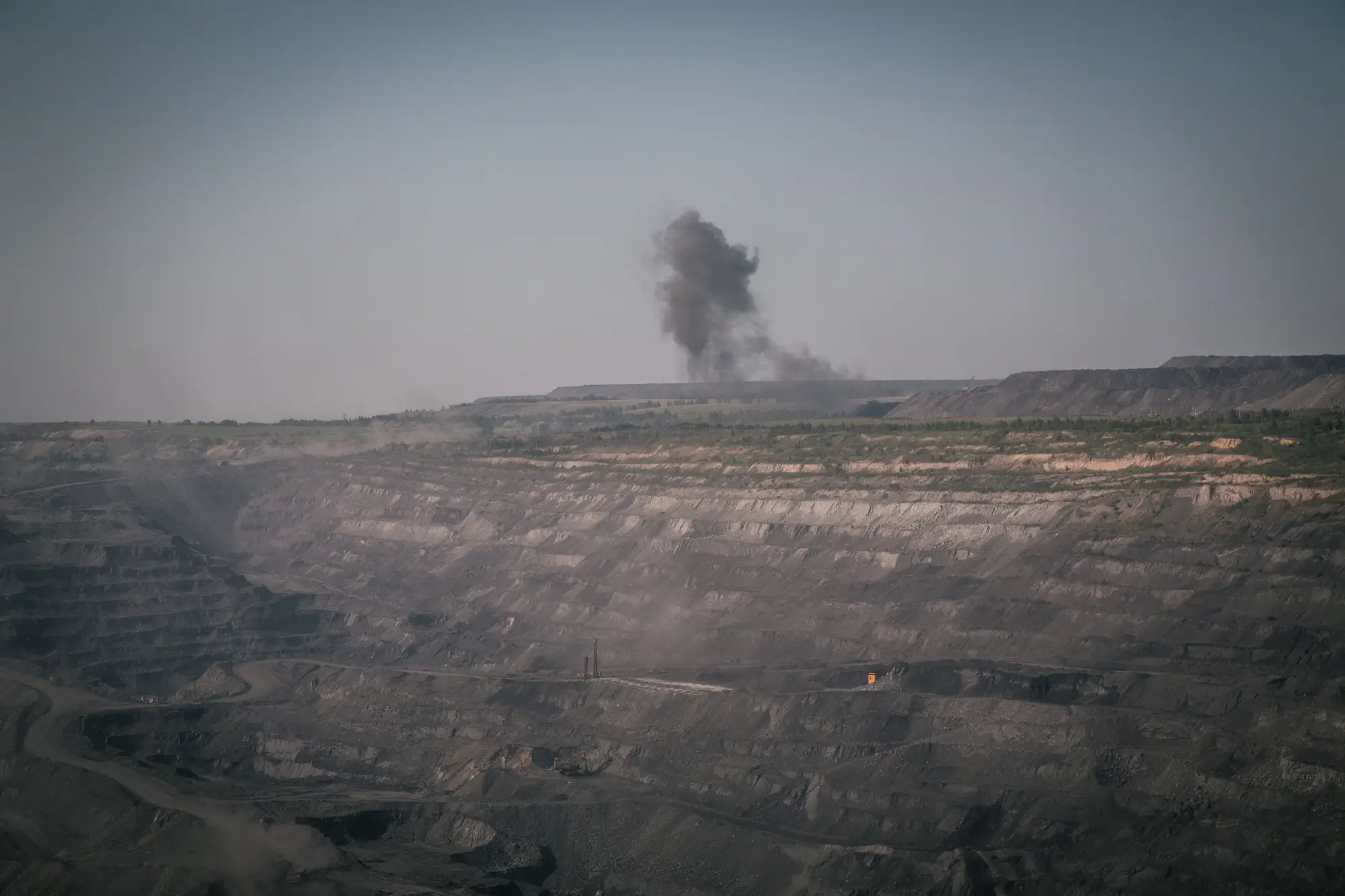
Terraced benches of an open-pit coal mine seen from a distance, with a plume of blast smoke on the far rim
Scenery: an open-pit coal mine near Novokuznetsk, seen from a distance.

Who it's for

For

  • Commodity analysts at trading desks and banks who own a mine-by-mine supply model for one commodity.
  • Quant and data analysts on the same desk who want a dated, per-site change series as an input.
  • Desks that would run a pilot on a short site list before committing.

Not for

  • Buyers who need production volumes, grades, costs or other non-public company figures.
  • Real-time or intra-quarter alerts.
  • Open-ended searches for mines that are not on your list.
  • Safety, compliance or tailings-dam monitoring on a site you operate.

Questions from the desk

Can you find sites that aren't on my list?

No. You supply the list. This is not exploratory search.

What if a site is cloudy that quarter?

That pass is skipped or delayed to the next clear one, and the summary says which.

Do you estimate tonnage or grade?

No. Footprint and object change only. The capacity view is yours.

How soon after a change does it show up?

In the next quarterly pass with a clear scene. It is not real time.

Can this replace my own site visits?

It narrows where a visit is worth scheduling.

How do I check it against what I know?

Each change carries its scene dates and a footprint, so you can lay it over a mine plan, a company photo or a past filing and judge it yourself. Tell us which sites you already know well and start the pilot there.

Does it plug into my model?

The CSV is flat, one row per change, keyed to your site IDs. The GeoPackage opens in standard GIS.

Who owns what you deliver, and is the imagery licensed for a desk?

The use terms for the delivered files are written into the pilot agreement. The imagery behind them keeps its own provider licence, which is confirmed before the pilot starts.

How is a pilot priced?

Scoped on the number of sites and the quarters covered, and quoted in writing. We don't publish a rate card.

Send the site list and we'll scope a pilot.

Start with the handful of mines that move your model most.