Conveyor length as a proxy for plant throughput capacity
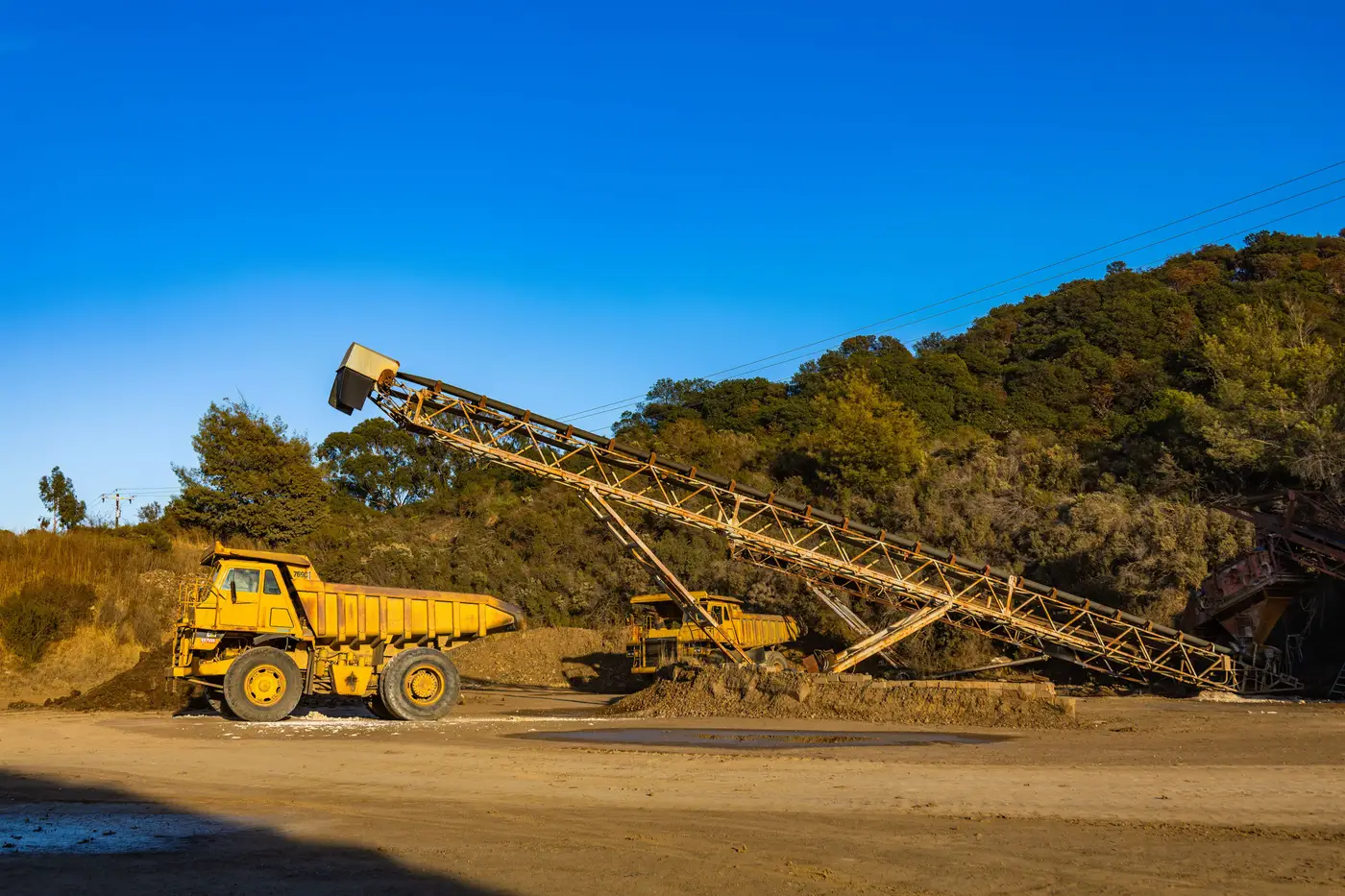
A new overland conveyor shows up in satellite imagery months before it shows up in a feasibility update or a quarterly MD&A. That lag is the whole reason conveyor length is worth tracking as a proxy for plant throughput capacity, not just a curiosity for engineers.
Why conveyor geometry tracks capacity at all
A conveyor isn't sized at random. The belt width, speed, and troughing angle get picked to match a target tonnes-per-hour figure at the crusher or the mill feed, and the length gets picked to connect a pit (or a new cut on an existing pit) to the plant or stockyard by the shortest practical haul. When a mine adds a new overland conveyor segment, it's almost always because the old haul route (truck fleet, or a shorter belt) can't carry the tonnage the new pit is meant to produce. The conveyor is downstream of a capacity decision that already got made in an engineering office somewhere, and the imagery is just catching up to it.
That's different from reading pit depth or waste dump growth, which tell you about ore movement but not necessarily what the plant can process. A bigger pit doesn't mean a bigger plant. A new conveyor run to a stockpile or a crusher almost always does.
What to measure in the imagery
Length is the easy part: trace the conveyor centerline from pit edge (or transfer tower) to the plant or stockyard, and you get a run length you can compare quarter over quarter. At sub-half-meter resolution, the structure reads cleanly enough to follow gantry supports, transfer towers, and the galvanized roofing most overland belts use, so you're not guessing at where the belt sits relative to the old haul road.
Length alone won't give you tonnes-per-hour. What it gives you is directional and comparative evidence: a site that adds 1.5 km of new overland conveyor is signaling a bigger throughput step than one that adds a 200 m connector between two stockpiles. Pair length against what else shows up in the same change window, like a new transfer tower, a widened stockyard footprint, or a second parallel belt run alongside the first, and the read gets a lot stronger. Two belts running parallel into the same crusher is a much clearer expansion signal than one longer belt doing the same job it did last year.
The other thing worth tracking is where the conveyor terminates. A belt that ends at a new stockpile pad tells you the operator is building buffer capacity, maybe ahead of a plant upgrade that hasn't broken ground yet. A belt that ends at a new crusher structure or a new transfer tower feeding an existing mill signals that the throughput change is already underway.
Putting it in a quarter-over-quarter routine
None of this works as a one-time look. The value is in catching the delta: a conveyor that didn't exist last quarter, a transfer tower added mid-route, a stockyard footprint that grew alongside it. Competitor mine expansion rarely announces itself all at once. It shows up as a sequence of small structural changes, a cleared right-of-way one quarter, support towers going in the next, belt and roofing after that.
Estimating processing capacity from conveyor imagery is inherently a comparative exercise, not a precise one. You're not going to back out a tonnes-per-hour number with any confidence just from a belt's footprint. What you can do is rank competitor sites by expansion signal strength and flag which ones are worth a closer look before the next production report lands. That's the actual use of the proxy: an early-warning layer on supply, not a replacement for the numbers once they're published.
If you're trying to build that kind of quarter-over-quarter read across a watchlist of competitor sites instead of doing it ad hoc, Competitor Capacity turns pit, plant, conveyor, and stockyard changes at named sites into a per-site log you can run against before the filings land.
Start tracking the next conveyor before it shows up in someone else's production guidance.