Field notes: the quarter a mid-tier miner expanded and said nothing
There's a particular kind of earnings call that trains you to stop listening to the words and start reading the pauses. It happened again this quarter, at a mid-tier producer I won't name because the point isn't the company, it's the pattern.
Guidance was flat. Management talked about "throughput optimization" and "debottlenecking the circuit," phrases that have become load-bearing in a way they weren't five years ago. Capex came in near the low end of the range. Nobody asked about expansion, because nothing on the slide deck suggested there was one. The call ran nineteen minutes and closed with the usual line about disciplined capital allocation.
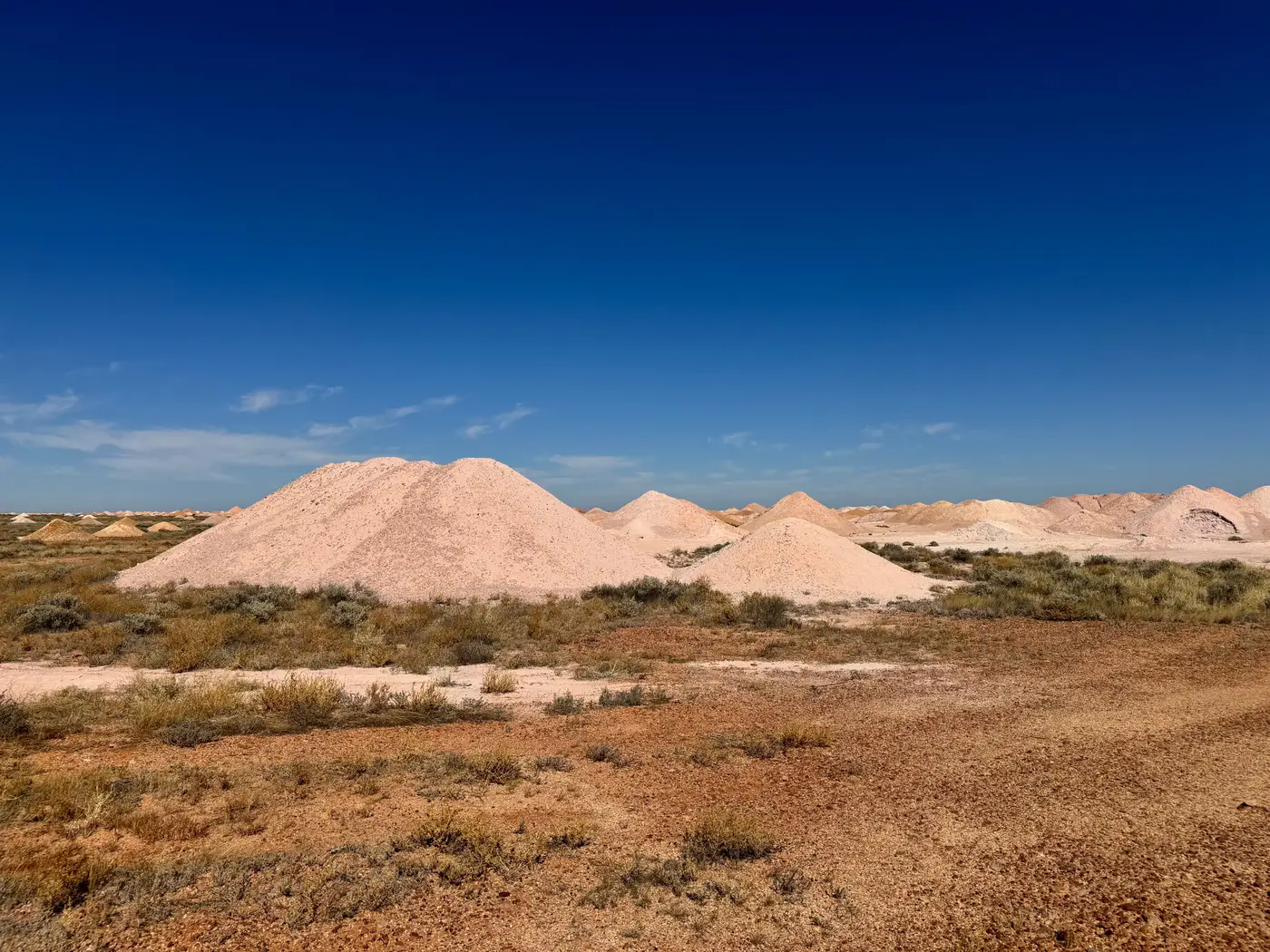
Three weeks later I was going through site imagery for an unrelated reason, pulling a quarterly pass on a basin where this producer has its flagship pit, and the waste dump on the north side had grown by a bench. A lift, visible in the shadow line, with a new haul road switching back to serve it. The ROM pad had widened. There was a second stacker conveyor running where three months earlier there'd been bare ground and a stockpile of pipe.
None of that is illegal, or even unusual. Companies are allowed to move dirt without announcing it on a call. But it's worth sitting with the gap between what gets said and what gets built, because that gap is where a lot of supply-side surprise comes from.
Mid-tier miners specifically don't have the investor relations headcount to narrate every piece of site work, and they don't always want to. A junior tells you about every drill result because it's the only story it has. A major tells you about capex because the market demands a five-year plan and punishes any deviation from it. The mid-tier sits in between. It can let a plant expansion sit quietly inside "sustaining capital" for two or three quarters, because sustaining capital doesn't get the same scrutiny growth capital does, and by the time it shows up in a production number, the market treats it as a surprise beat rather than the thing it actually was: a decision made a year earlier that nobody had to disclose in real time.
I've started keeping a running note on sites like this, the ones where language on the call and activity on the ground diverge. It's closer to noticing that a neighbor's garage light has been on every night for a month before you find out they're renovating. The information was always there. You just weren't looking at the right thing.
The hard part is doing it consistently, every quarter, across every name in a coverage list, without it turning into a part-time job of guessing from blurry aerials and old flyover shots you happened to find. That's the gap a per-site log of new pits, plant additions, conveyor extensions and stockyard growth is built to sit in: the physical stuff, read off current high-resolution imagery on a quarterly cadence, so the change shows up as a dated entry before it shows up as a line in next year's reserve statement.
What strikes me most, writing these notes, is how little of this requires inference. An analyst doesn't need to speculate about intent to read a bench. A new bench is a new bench. A second stacker is a second stacker. The physical footprint of a mine tells you what the balance sheet eventually will, just earlier, and without having to parse an earnings call for the sentence that didn't get said.
So the next time a call ends with flat guidance and no questions about capacity, it's worth asking what the site itself would say if it had the floor. If you'd rather see that answer on a schedule instead of stumbling into it by accident, that's what Competitor Capacity is for.