Field notes: the winter a competitor's pit went quiet, and then didn't
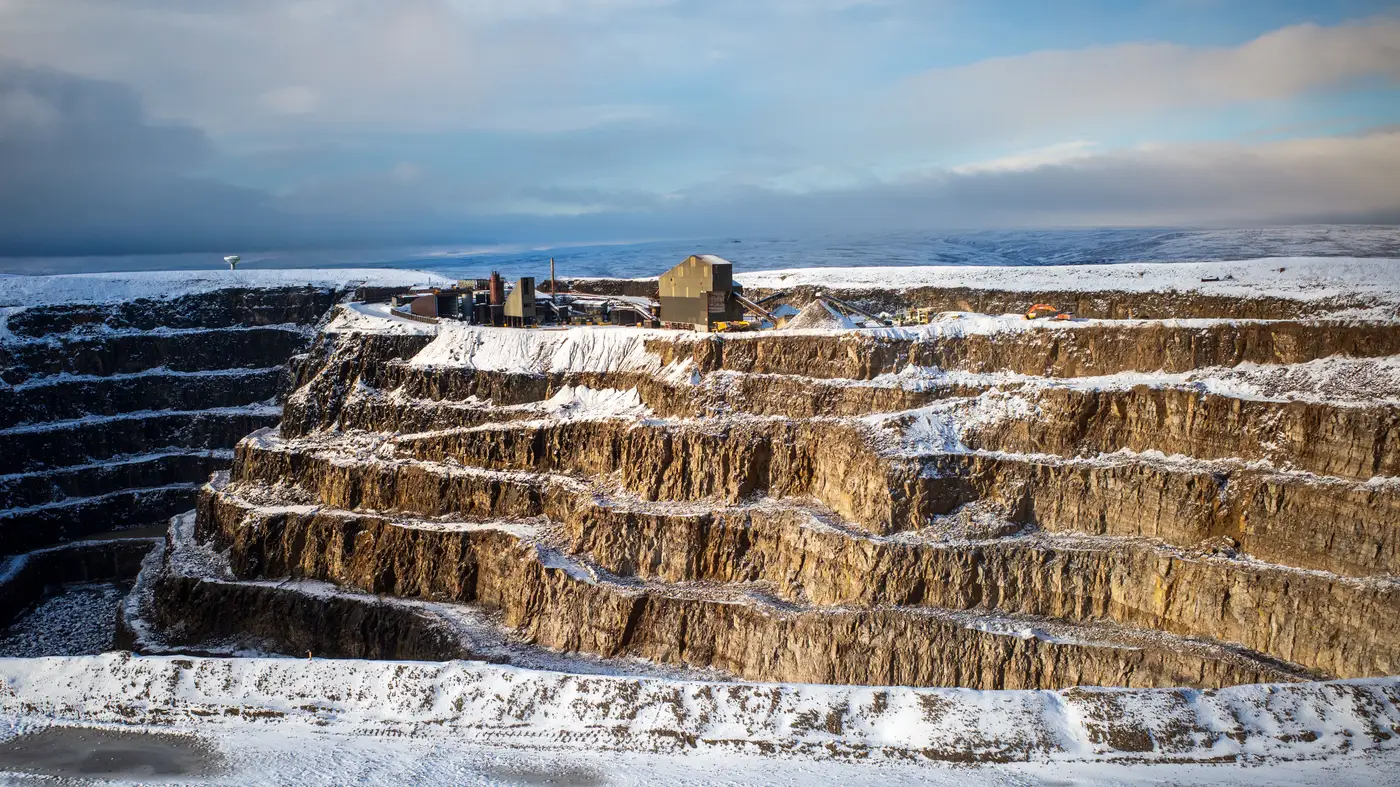
There's a particular kind of worry that sets in when a pit you've been tracking for three years just stops moving. Not closes. Not gets written down in a filing. Just stops showing the signs you're used to reading.
I had one of these last winter, a mid-tier base-metals operation I'd watched since it was still permitting. For two straight quarters the haul road traffic patterns I'd gotten used to went flat. No new cuts on the north wall. The waste dump that had been growing a bench a quarter sat at the same elevation. Stockyard tonnage, eyeballed off pile shadows, didn't move. My working theory was the obvious one: grade had gone bad, they were mining around a fault they hadn't disclosed, or the whole thing was a slow-motion care-and-maintenance decision nobody wanted to say out loud before the annual report made it official.
I wrote it up that way in a note to the desk. Operation stalled, downgrade the forward tonnage assumption, watch for a guidance cut next quarter.
Then the spring pass came in and the pit hadn't stalled at all. It had been staging.
What I'd read as inactivity was actually a haul road realignment, the kind of unglamorous civil work that doesn't move a strip ratio or show up as new waste but takes two quarters of equipment time before a single extra tonne gets pulled. They'd widened the ramp grade, which only makes sense if you're planning to run bigger trucks on it. Once that was done, the bench sequence that had looked frozen moved three lifts in one pass. A second crusher pad appeared next to the first. A conveyor spur that hadn't existed before now ran from the pit rim toward a stockpile area that had been bare ground the quarter prior.
None of that work gets a press release. A haul road doesn't trigger a material-change filing. The company's next quarterly still talked about the same reserve base and the same life-of-mine plan, because nothing about the orebody had changed, only the rate they intended to pull it at. By the time that showed up in a production number, the realignment was nine months old and the truck fleet order behind it was probably already placed.
The miss itself didn't bother me as much as how reasonable it had been. Everything I was trained to look for, new cuts, growing dumps, stockpile build, had gone quiet in exactly the way it would if the site were winding down. In fact the site was doing the unglamorous, low-signal work that precedes a step-change in throughput, and that work reads as nothing if you're only checking in once or twice a year and only looking for the loud stuff.
I've started treating quiet differently since then. A pit that stops advancing on schedule but keeps moving equipment, keeps grading new surface, keeps touching infrastructure that doesn't yet connect to anything is mid-sentence. The question worth asking is what changed at the site that only makes sense if the plan changed. Answering that means comparing each quarter's pass against the one before it, watching for the civil work that precedes a step-change instead of waiting around for the step-change itself to show up in a filing.
That's the whole case for watching named sites on a fixed cadence instead of waiting for a number to tell you something happened. The site that sat on our Competitor Capacity log through that stretch showed the road work as a flagged change the quarter it happened, months before the bench count moved and well over a year before the throughput number did.
If you've got a site on your list that's gone quiet lately, it's worth checking whether quiet means nothing, or means not yet.