Camp expansion vs. plant expansion: reading a remote mine site right
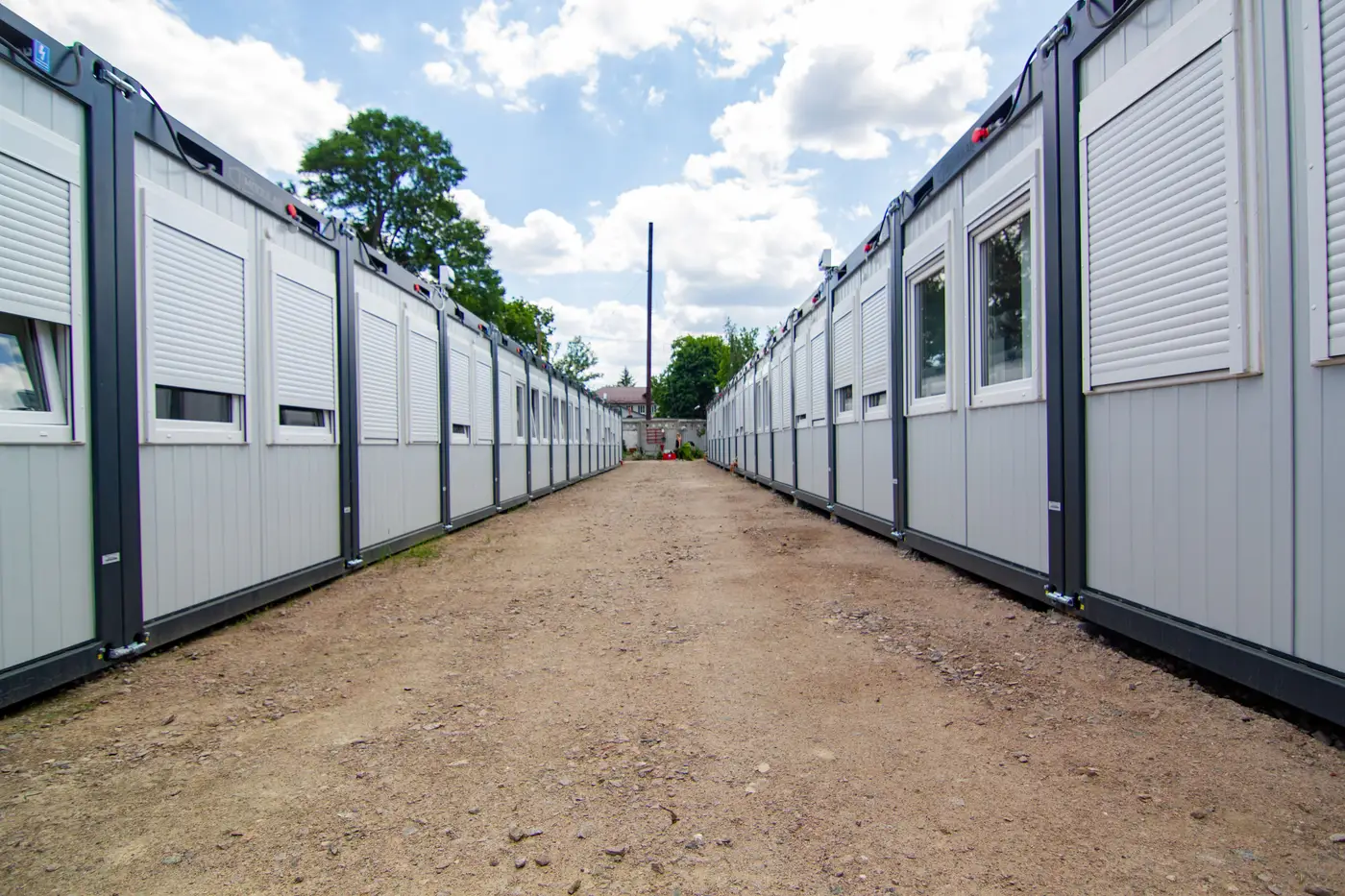
You pull up the latest pass over a site you've been tracking for two years and something new is on the ground. Before you write anything down for the model, you need to know which kind of new it is. A camp add-on and a plant expansion get coded completely differently in a supply forecast, and mixing them up is how an analyst flags a capacity signal eighteen months before anything actually ships.
What camp growth looks like on the ground
Workforce accommodation reads as repetition. Rows of modular units, usually 6 to 12 meters per block, laid out in pods or grids with consistent spacing. You'll often see the mess hall and rec facilities (a basketball court, a gym shed) sitting at the center of the layout, with parking bays and sometimes a new section of the airstrip apron if it's a fly-in-fly-out operation. The footprint grows in discrete chunks, a new wing of 50 to 150 beds, rarely a sprawling continuous build.
Camp additions also tend to show up before anything structural happens near the pit or plant. Operators mobilize housing ahead of a construction crew. A camp that's grown with no matching earthworks near the process plant usually means the company is staging labor for a build that hasn't broken ground yet.
What plant expansion looks like on the ground
Plant and capacity work reads as mass: continuous concrete pads, structural steel going up in a non-residential footprint, tankage, conveyor galleries threading from a stockpile toward a crusher or mill. Stockyard pads get regraded and extended well before the conveyor arrives, so bare, compacted earth near an existing ROM pad is often the earliest tell that a stockyard expansion is coming. Tailings storage facility lifts and new water management ponds are the slower, heavier cousin of this same signal, and they tend to track mine life extensions rather than short-term output bumps.
The key visual difference: camp growth is uniform and low-profile. Plant growth is irregular, heavier, and sited close to the existing process infrastructure rather than near an airstrip or existing accommodation block.
Reading the two together
The sequence is the actual signal. Camp expansion with no plant-side earthworks yet is an early read, often a construction workforce surge still two or three quarters out from any plant steel going up. Camp expansion plus new conveyor or stockyard footprint happening in the same window means the capacity build is already underway, and production guidance is likely to move before the next filing acknowledges it.
Treat the two as separate line items in your own tracking, even though they usually show up close together in time. Camp bed count tells you about labor mobilization and near-term capex timing. Stockyard, conveyor, and crusher footprint tell you about actual throughput capacity. Conflating them into one "something's happening at this site" note loses the lead time that makes the distinction worth tracking in the first place.
What to check each quarter
For any named site on your watchlist, compare four things against the prior quarter: pit shell extent, waste dump growth, stockyard and ROM pad area, and conveyor or plant footprint. Track camp bed count on its own line. A jump in camp size alone points to labor mobilization, usually running ahead of plant construction by a quarter or two. A jump in stockyard or conveyor footprint changes your supply model as soon as you see it, with or without matching camp growth, because that footprint tracks throughput capacity that shows up in production numbers long before any filing names it.
That's the whole exercise behind a per-site change log built for exactly this comparison: new pits, plant additions, conveyor growth, and stockyard area tracked quarter over quarter at named competitor sites, so the camp-versus-plant read is already done before you open the imagery yourself.
If you're tracking competitor expansion by hand right now, it's worth seeing what a quarterly change log catches that a site visit never could.