What a secondary crushing circuit addition tells you about capacity
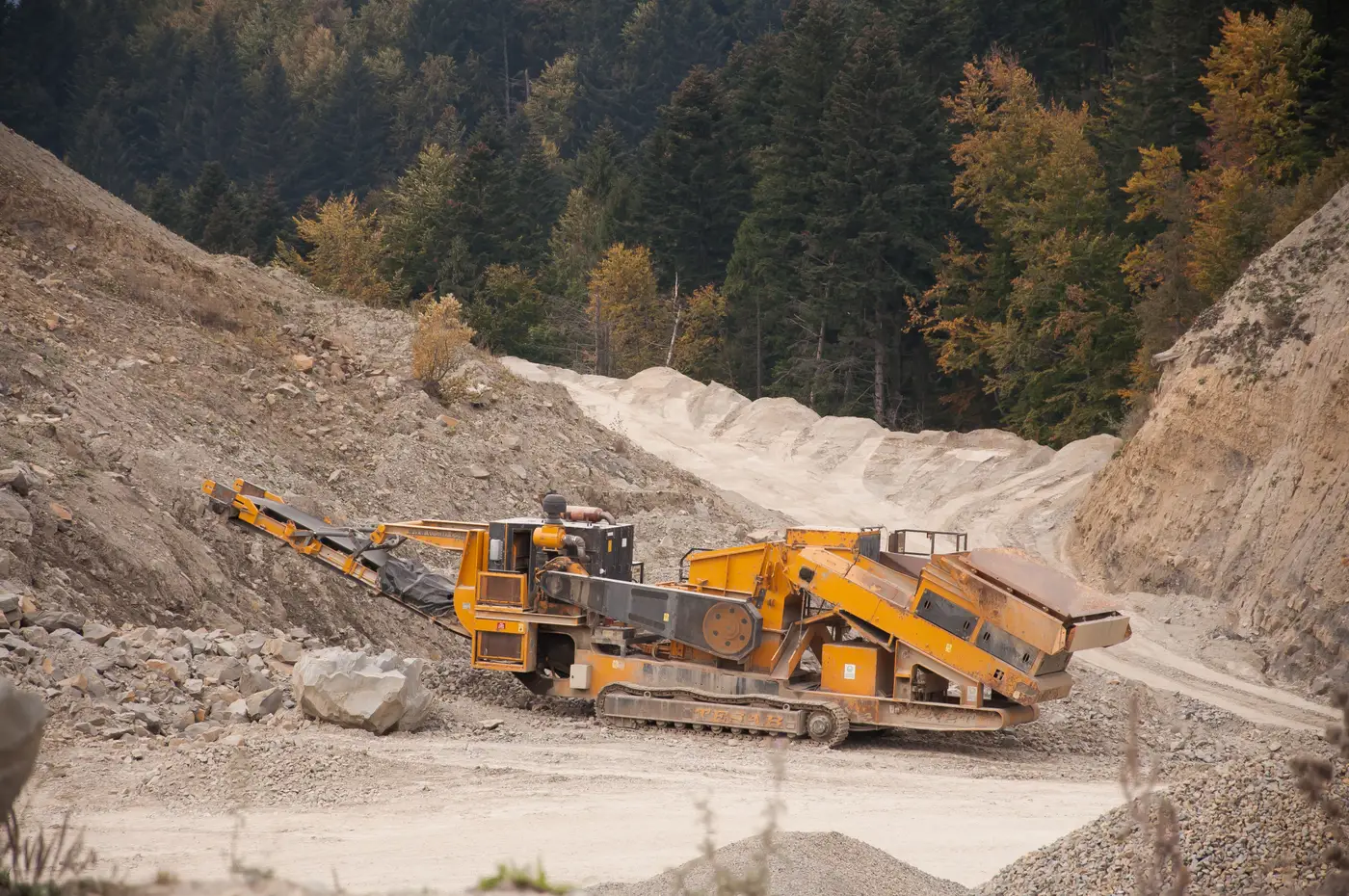
A new foundation pad next to the primary crusher, a second conveyor run tying into the stockyard, a cluster of structural steel that wasn't there last quarter. If you track open-pit or hard-rock sites for a living, you've probably learned to treat these as more than construction noise. A secondary crushing circuit addition is a throughput signal: one of the more reliable tells that a competitor is building toward a higher sustainable production rate, and it usually shows up on site well before anyone puts a number on it in a quarterly report.
Primary crushing versus secondary crushing, and why the split matters
A primary crusher, almost always a jaw or a gyratory, takes run-of-mine rock straight off the haul trucks and knocks it down from boulder size to something a conveyor can carry, typically in the 150-300 mm range depending on the ore and the circuit design. That's the bottleneck stage most operators size first, because undersizing it caps everything downstream regardless of what else gets built.
The secondary stage, usually a cone crusher running closed-circuit with a vibrating screen, takes that primary product and reduces it further, feeding a tertiary crusher, a SAG mill, or straight to the ball mill circuit depending on the flowsheet. A secondary crusher doesn't do much on its own. It's a capacity multiplier for whatever the primary stage already produces. A site can run a primary crusher alone for years at a conservative rate. Adding the secondary stage is almost always a signal that someone decided the existing circuit was leaving throughput on the table, or that a planned mine expansion needed a comminution circuit sized for more tonnes than the current one can push.
That's the part worth sitting with: operators don't bolt on a secondary crushing circuit for the look of it. The capital cost, the civil works, the extra conveyor runs and screen decks all have to pencil out against a higher planned mill feed rate. If the circuit is being added rather than just refurbished, that's usually downstream of a production decision that hasn't been disclosed yet.
What the build-out looks like from above
A few things tend to appear together when a secondary crusher is going in, and each is visible well before commissioning. A new foundation and structural steel cluster shows up adjacent to the existing primary crusher station, sized for a cone crusher and its drive. A screen house follows, usually a smaller footprint structure with a steeper roofline, positioned to feed the new crusher's discharge back through a classification deck. Additional conveyor galleries connect the new stage to either the existing stockyard or a new one, since a higher-capacity circuit usually needs more live storage to buffer the mill feed. Often the stockyard footprint is already growing before the crusher itself is finished, because operators tend to build out their surge capacity ahead of the throughput increase it's meant to support.
None of this shows up in a single satellite pass. It builds in stages over several quarters: earthworks and pad first, then structural steel, then conveyor galleries, then the stockyard growth that tells you the operator expects the new tonnes to actually show up. Reading that sequence against what the operator has said publicly, or hasn't said, is the whole exercise.
Reading it as a supply signal
For an analyst modeling supply, a secondary crushing circuit addition at a named site is a lead on capacity that predates the capital markets disclosure by a quarter or two, sometimes more. It won't give you the exact tonnage increase, and it shouldn't be treated as a precise number. But it tells you direction, timing, and which specific site is the one to watch when the next production guidance update comes out.
That's the gap Competitor Capacity is built to close: a per-site change log that tracks pit extensions, plant additions, conveyor builds, and stockyard growth at named mine sites on a quarterly cadence, so a crusher pad shows up as a dated change rather than something you notice by accident on your next imagery pull.
If a competitor's secondary circuit is the capacity signal you're trying to catch early, that's the use case this site is built around.