What a stockyard reclaim system is, and why its growth is a capacity signal
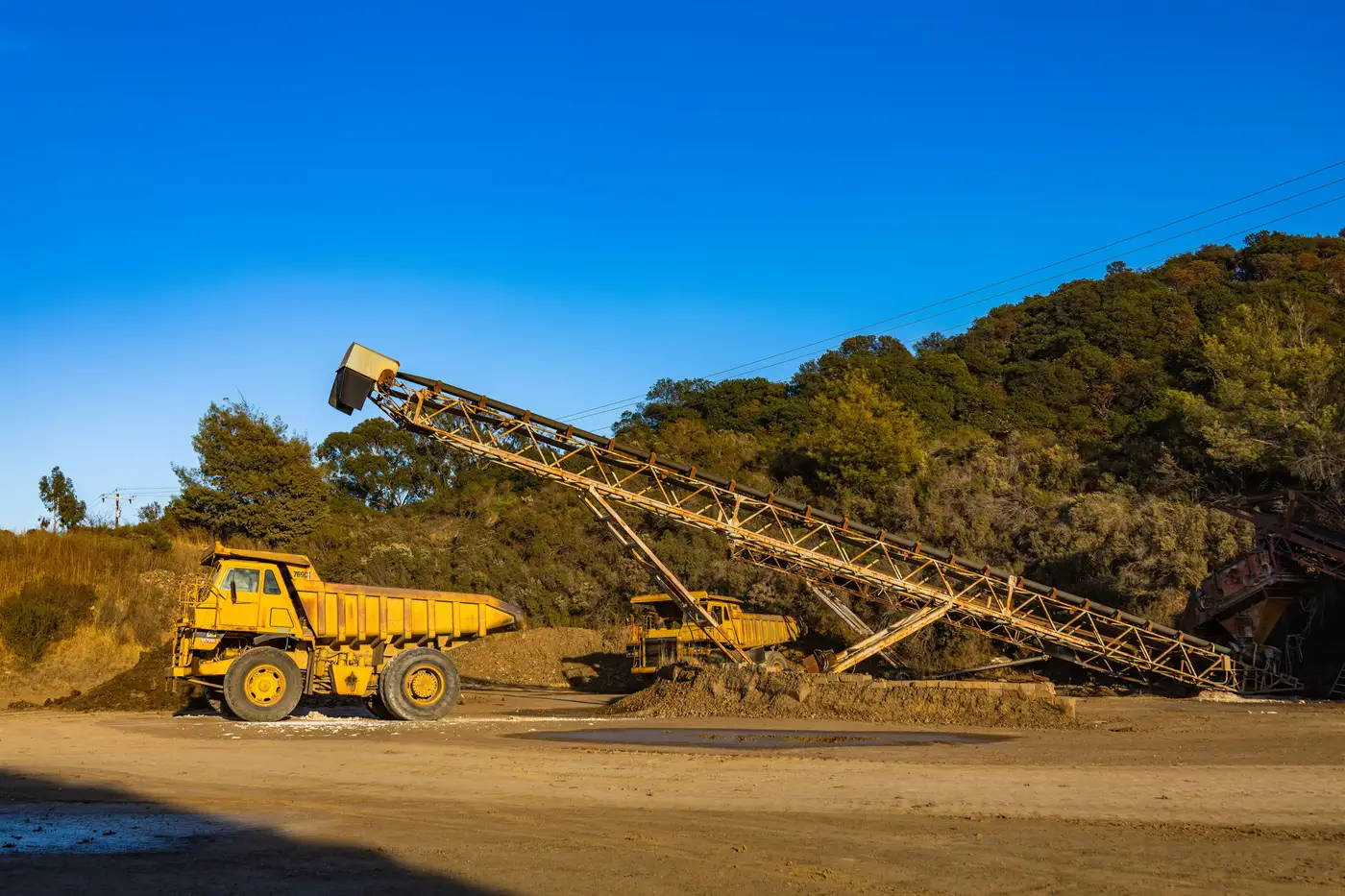
A stockpile is just ore sitting on the ground. A stockyard reclaim system is the machinery that pulls that ore back off the pile and feeds it onto the conveyor that gets it to the crusher, the blending bed, or the ship loader. Most of the time that's a bucket-wheel reclaimer running on rails along the base of the pile, sometimes on the same gantry as a stacker, sometimes on a separate line entirely. The reclaimer is the part of the yard that sets how fast ore leaves the yard, no matter how big the pile gets.
That distinction matters more than it sounds. A mine can grow its stockpile footprint for years without touching its real throughput ceiling. Piling more tonnes on the ground is cheap: push some dirt, build a bench, start dumping. Reclaim capacity is the expensive half of the equation, a new bucket-wheel unit, a longer rail gantry, a second reclaim tunnel under the pad. When a site adds that gear, it's committing capital to move more ore through the circuit, not just store more of it.
The reclaim system is the bottleneck, not the stockpile
Think of the stockyard as a buffer between mining and shipping. Mining is lumpy, blasts, weather, equipment downtime, so operators build stockpile ahead of the reclaim line to keep the port or the plant fed on a steady diet. But reclaim conveyor capacity is what actually governs tonnes-per-hour out the back end. A bigger pile sitting on top of the same old reclaimer just means a bigger buffer. It doesn't mean a bigger company.
That's why stockyard expansion at a mine site is worth reading carefully instead of lumping it into one line item. A new stacker on its own could be yard reshuffling, a blending strategy change, or an old unit replaced like-for-like. A new reclaim line, a rail spur running to a new tunnel, or a second bucket-wheel unit parked parallel to the existing one is a different kind of tell. That's a site committing to move more tonnes than its current reclaim gear can handle, months before anyone says so out loud.
Why ore stockyard growth is a leading indicator
Permits for a reclaim upgrade, procurement of the unit itself, civil works for a second tunnel, none of that shows up in a quarterly production report until commissioning is done and tonnes start flowing through it. By the time a company discloses the capacity addition in a filing or on an investor call, the concrete's long poured and the steel's long erected. On a sizeable project, the gap between foundations going in for a new reclaim tunnel and the company guiding to higher annual tonnes can run a year or more.
That gap is where competitor capacity analysis earns its keep. A site adding conveyor length, standing up a second stacker-reclaimer gantry, or visibly widening its stockyard pad is doing something it can't hide and usually isn't in a hurry to flag ahead of its own disclosure calendar. It's physical construction sitting on open ground, quarter after quarter, for anyone watching to see.
None of this replaces reading the filings. A reclaim upgrade doesn't tell you the exact tonnage increase, the commissioning date, or whether the project stalls halfway through. What it tells you is direction and timing: this site is building for more throughput, and ground was broken before anyone announced it. Paired with a pit extension or a new plant addition at the same site, a reclaim buildout is one more data point in a pattern that usually points the same direction.
If you're trying to track that pattern across a competitor's sites without waiting on their press cycle, Competitor Capacity turns quarterly satellite reads of pits, plant additions, conveyors, and stockyards into a per-site change log built for exactly this kind of read. Take a look at what a quarter of change at one of your competitor's sites looks like.