What is an autoclave circuit, and why does adding one signal a capacity increase?
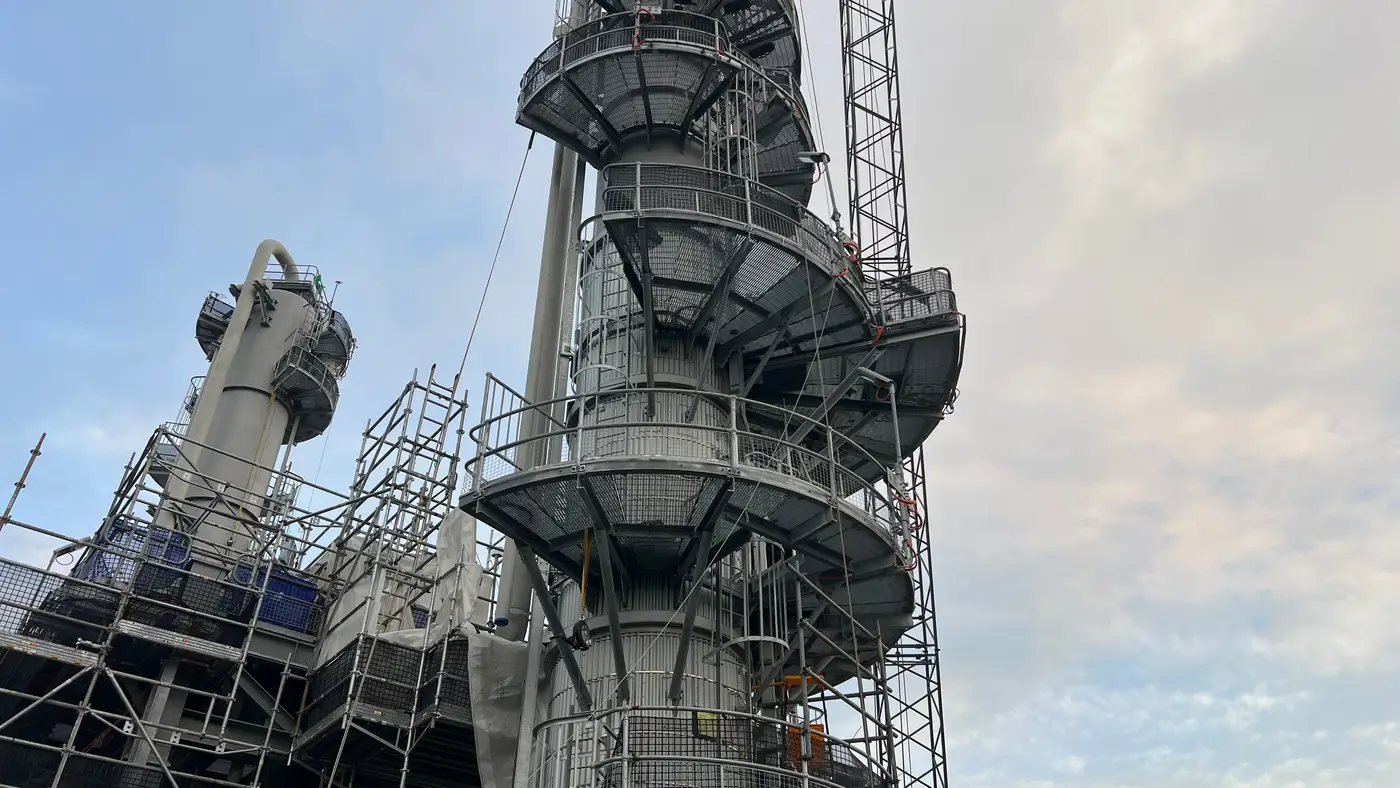
When a refractory gold or nickel laterite operation starts pouring foundations for a new pressure vessel train, that's not routine maintenance capex. An autoclave addition almost always means the operator has run out of oxidative headroom on the ore they're currently mining, and they're buying their way into reserves they couldn't profitably treat before.
What a pressure oxidation circuit is actually doing
Refractory gold ore locks the gold inside sulfide minerals, mostly pyrite and arsenopyrite, where cyanide can't reach it no matter how long you leach. Nickel laterites have their own version of the problem: the nickel sits in a matrix that won't dissolve under atmospheric conditions at a rate anyone can finance.
Pressure oxidation solves both by putting ground ore into a sealed, agitated vessel with oxygen under 300-500 psi and temperatures north of 200°C. The sulfides break down, the arsenic reports to a stable compound, and the gold or nickel is finally exposed for conventional leaching downstream. An autoclave train usually runs two to four vessels in series, each with its own compartments, agitators, and a slurry pump arrangement big enough to move a lot of hot, abrasive material without stopping.
None of this is cheap or fast to build. A single autoclave vessel can run the size of a rail tank car, and the oxygen plant that feeds it needs its own power draw, its own cooling, its own footprint. That's the part worth watching.
Why adding one is a capacity statement, not a maintenance one
Operators don't retrofit a POX circuit because the old one is wearing out. Autoclaves are built to run for decades; a vessel reline is a shutdown event, not a construction project. When you see new vessel shells, a second oxygen plant, or an expanded tailings neutralization pad going up next to an existing autoclave train, the operator is telling you one of two things: they've blended in a harder, more sulfidic ore body than the current train can digest, or they're planning to process meaningfully more tonnage than the current circuit was sized for.
Either way, that's a forward statement about throughput that won't show up in a quarterly production report for twelve to twenty-four months, which is roughly how long it takes to pour foundations, erect vessel shells, commission the oxygen plant, and ramp a new train to design rates. By the time the reserve update or the guidance revision mentions the added capacity, the concrete's been cured for a year.
This is also why autoclave additions are a cleaner tell than, say, a new crusher or a conveyor extension. Crushing capacity gets added for all kinds of reasons, including just catching up to an existing mill. A pressure oxidation train only gets added when the operator has decided to process ore that was previously stranded, either because it's higher-sulfide, higher-arsenic, or both. That decision tends to follow a reserve reclassification or a new feed source coming online, which is exactly the kind of supply-side move an analyst wants six months before the market prices it in.
What to actually look for on site
The giveaways are consistent across gold and nickel operations: a cleared pad adjacent to the existing autoclave building, vessel-sized foundations (distinct from the smaller footings for leach tanks), a second oxygen plant structure, and expanded neutralization or tailings capacity to handle the extra throughput. None of these show up in a press release until commissioning is close, but all of them show up in satellite imagery the quarter ground gets broken.
That gap between "pad is cleared" and "production guidance reflects it" is the whole trade. Competitor Capacity tracks exactly this kind of plant addition at named sites on a quarterly cadence, logging new pits, conveyors, stockyards, and processing infrastructure like autoclave trains as they go up, so the capacity signal reaches an analyst's desk before the filing does. If tracking the physical buildout of competitor processing capacity is part of your supply model, see how the per-site change log works.